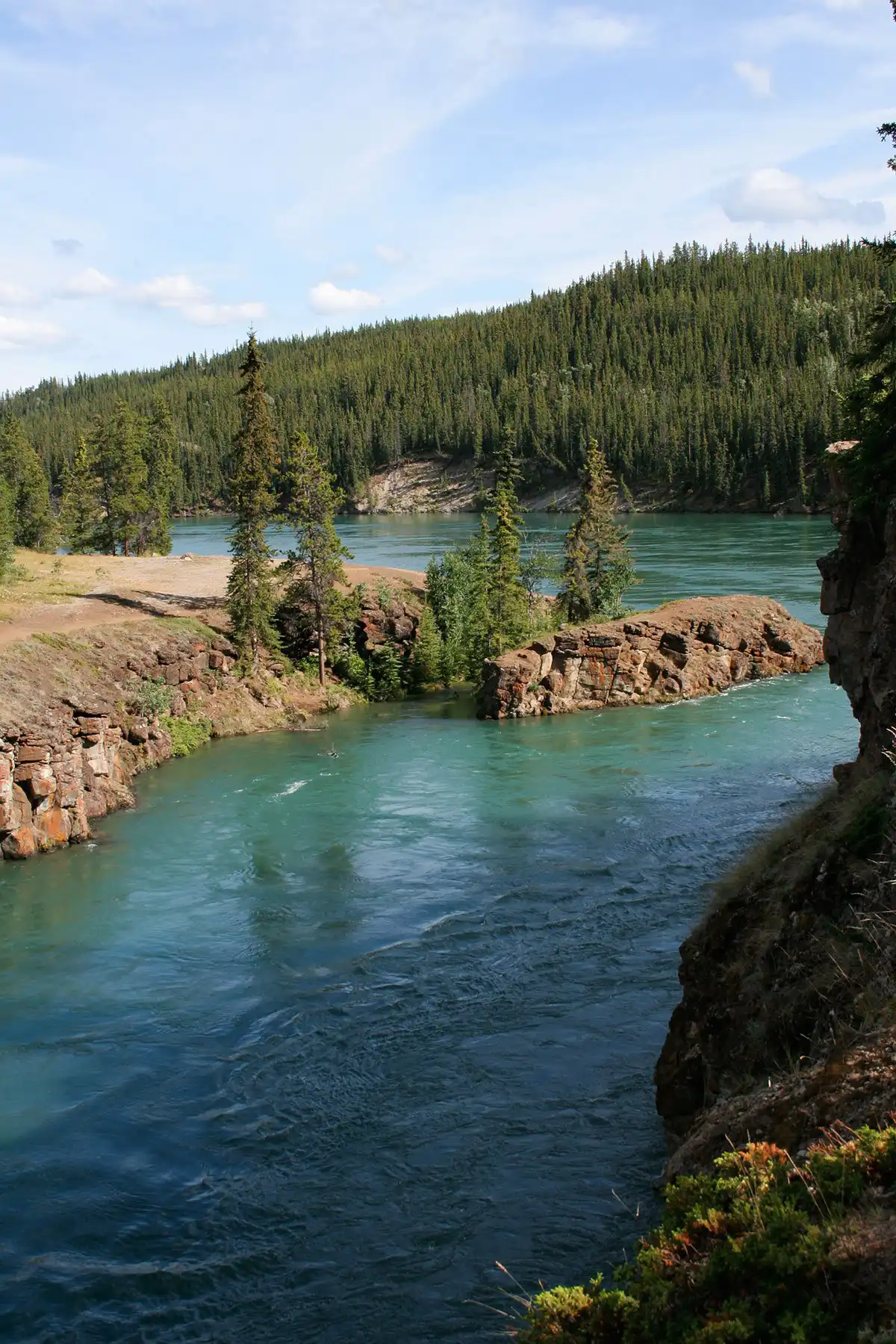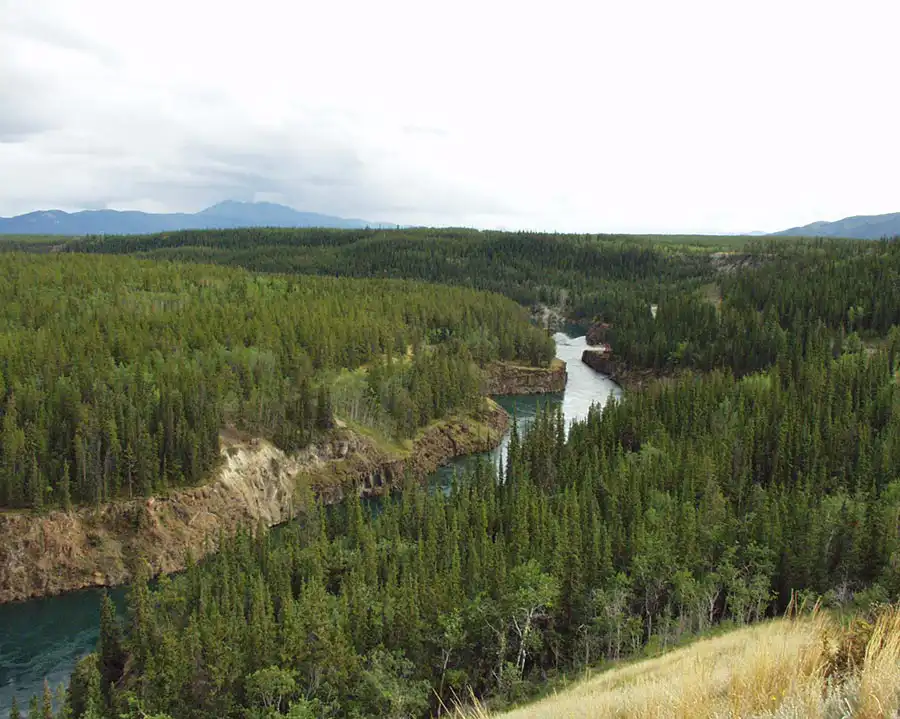


























Originally referred to as Grand Canyon, Fredrick Schwatka renamed it in July of 1883 Miles Canyon after General Nelson Miles. Schwatka wrote, “Through this narrow chute of corrugated rock the wild waters of the great river rush in a perfect mass of milk-like foam, with a reverberation that is audible for a considerable distance.” Although accounts differ as to the ferocity of the rapids, there is no question that they were very dangerous. During the Gold Rush, hundreds of boats loaded with precious supplies were lost (as well as several lives) before the Northwest Mounted Police arrived to regulate traffic.
Eventually a wooden rail system around the canyon eliminated the need to battle this hazard. The hydroelectric dam constructed to provide power to Whitehorse has tamed Miles Canyon, but drifting through its 50-foot high basaltic walls is still a thrill.
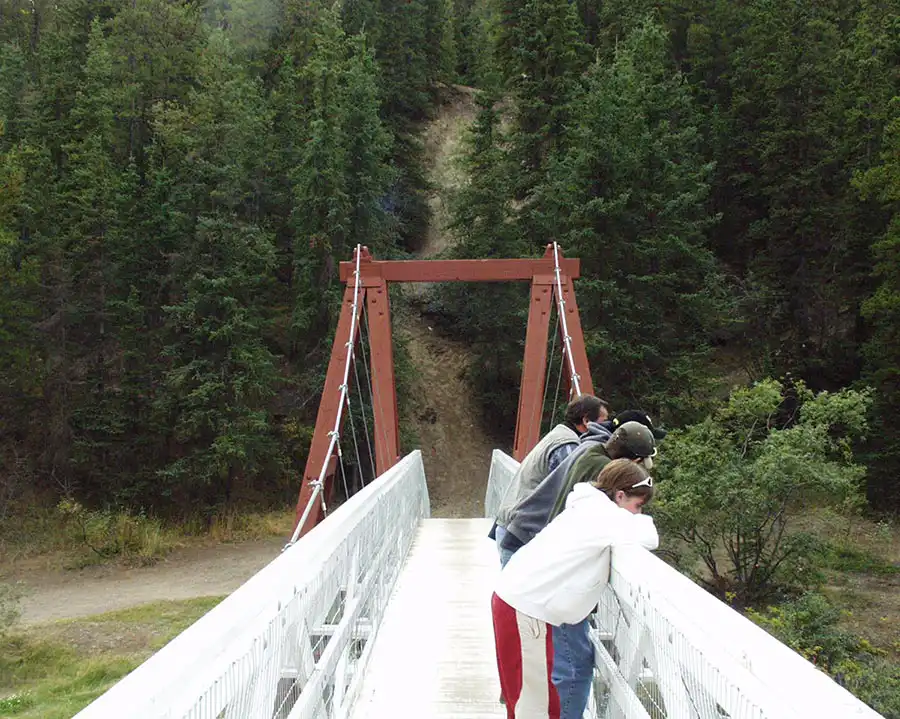
The suspension bridge across Miles Canyon was built in 1922 and dedicated by Governor General Lord Byng. Lowe came to the Yukon in 1899 and had mining interests in the Whitehorse Copper belt and a successful cartage business. Robert Lowe became a long serving local and territorial politician.
Miles Canyon is only a short drive from downtown Whitehorse. You can reach the main parking areas from either side of the Yukon River, with signed access roads leading to viewpoints and the Robert Lowe Suspension Bridge. On the south side, a paved road brings you close to the canyon rim; on the north side, a gravel road connects to trailheads and day use areas near the bridge. Vehicle access can be limited in winter when some roads are gated, but the area remains popular for year round walking and skiing.
From the bridge you can enjoy classic views of the narrow green river cutting through dark basalt cliffs. Simple path sections close to the parking lot make it easy to take in the scenery without committing to a long hike, and many visitors are content to walk across the suspension bridge, explore a short stretch of trail on either side, and stop for photos.
For those who want to go farther, Miles Canyon is a hub for several well used trails. From the bridge area you can connect to the 1.5 km Canyon City Trail, which follows the Yukon River to the historic Canyon City townsite, and to longer routes that form part of a 15 km Yukon River loop and the larger Chadburn Lake park trail network. In summer these trails are popular with hikers and mountain bikers; in winter many routes are used for cross country skiing and snowshoeing.
The trails around Miles Canyon are generally well defined, but they do pass close to steep canyon edges in places. Stay on main routes, keep children and dogs close, and use extra caution in wet or icy conditions. Water levels and currents in the Yukon River are controlled by the upstream hydroelectric dam, but the river remains cold and fast moving year round, so access to the shoreline should be treated with care.
The traditional Southern Tutchone name is Kwanlin (sometimes rendered as Kwäninlen or Kóogháa Nélíní in related Tagish usage). The name, from which the Kwanlin Dün First Nation derives its own, translates to “running water through canyon” or “water flowing through the canyon.” It describes the powerful surge of Chu Níikwän (the shining waters of the Yukon River) as it narrows between sheer rock walls. For generations before European contact, the area was a vital fishing site and well-travelled corridor, with established trails along the banks that reflect centuries of Indigenous use and knowledge of the landscape.