














The Silver Trail is Yukon Highway 11, a 110 km side road off the North Klondike Highway into the old silver-mining country of central Yukon. It runs from Stewart Crossing along the Stewart River to the village of Mayo, then climbs past lakes and wetlands to the former mine town of Elsa and ends at Keno City, below Keno Hill. The road is in the traditional territory of the First Nation of Na-Cho Nyäk Dun.
It is paved to just past Mayo and gravel beyond. Fuel is sold only at Stewart Crossing and Mayo, and Mayo has the only grocery store. Past Mayo, a great place to eat is the Keno City Snack Bar in Keno City (phone ahead), so fill up and stock up in Mayo for the last 60 km to Keno City. The best time to go is late May to mid-September, when the museums, campgrounds and Keno Hill road are open.
| Length | About 110 km (68 mi), Stewart Crossing to Keno City. It is a dead-end road. |
|---|---|
| Start | North end of the Stewart River bridge at Stewart Crossing, North Klondike Highway km 534 |
| Highway number | Yukon Highway 11 |
| Surface | Paved from Stewart Crossing to just past Mayo, then maintained gravel for roughly the last 50 km to Keno City |
| Communities | Stewart Crossing (km 0) · Mayo (about km 50) · Elsa (about km 96, closed to the public) · Keno City (km 110) |
| Fuel and supplies | Stewart Crossing (24-hour card pumps, no store) and Mayo (fuel, groceries and meals). No fuel or grocery store beyond Mayo. In Keno City, the Keno City Snack Bar serves pizza; phone ahead. |
| Government campground | Five Mile Lake, km 57 (26 sites, serviced May 8 to September 20, 2026) |
| Visitor information | Binet House Museum, Mayo (late May to mid-September) · Keno City Mining Museum and Alpine Interpretive Centre (Victoria Day to Labour Day) |
| Road conditions | 511 Yukon (official, live) |
Kilometres count from the Klondike Highway junction at Stewart Crossing and follow Government of Yukon kilometre posts. They are approximate.
Stewart Crossing grew up where the 1950 Whitehorse–Mayo road crossed the Stewart River on a ferry. A bridge replaced the ferry in 1960. Today it has the junction fuel station, which has 24-hour card pumps, no attendant and no store, and little else. Travellers have reported that the pumps are sometimes not working, so don’t arrive on empty. Moose Creek Campground is 25 km north on the Klondike Highway, and Ethel Lake Campground is 24 km off the Klondike Highway at km 524.
Mayo sits where the Mayo and Stewart rivers meet, about 400 km north of Whitehorse, and has about 450 people. About half are members of the First Nation of Na-Cho Nyäk Dun. The town site was laid out in 1903, and for decades silver, lead and zinc ore from Keno Hill was loaded onto sternwheelers here. Mayo holds Yukon’s high-temperature record, 36.1°C on June 14, 1969, and dropped to −62.2°C on February 3, 1947.
Charlie Brefault staked the Elsa claim on Galena Hill in 1924 and named it for his sister. It became the centre of United Keno Hill Mines, with about 700 people in 1947, until the mines shut down in 1989. The townsite is private and closed to the public, so view it from the road.
Keno City began in 1919 as a stopping place on the ore haul road and was officially established in 1922. Today it has about 20 residents, no fuel and no grocery store. The Keno City Snack Bar, run by Mike Mancini since 1995, serves homemade pizza, but hours vary, so phone ahead. It is a pack-in, pack-out community: take your garbage back to the Mayo landfill.
| Place | Km | Fuel | Food and supplies | Places to stay |
|---|---|---|---|---|
| Stewart Crossing | 0 | Gas and diesel, 24-hour card pumps, no store | None | None (campgrounds on the Klondike Highway) |
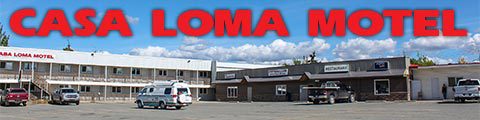
| Mayo | 50 to 52 | Gas and propane. Check hours locally, because some pumps are card-lock. | Mayo Foods (groceries, deli and hot food), coffee at Ihdzí’, and take-out food | Motels, a B and B, cabins, the Raven’s Landing suite, an RV park and campgrounds |
| Five Mile Lake | 57 | None | None | Government of Yukon campground |
| Elsa | 96 | None | None | None (closed to the public) |
| Keno City | 110 | None | Keno City Snack Bar (pizza; phone ahead). No grocery store, so bring food and water from Mayo. | Community campground, a rustic ski hut and a few cabins. Ask at the museum. |
Mayo is the only place on the Silver Trail with a grocery store and a bank outlet, and past Mayo the only place to eat is the Keno City Snack Bar. Hours are short in the off-season, so call ahead if you are travelling outside summer.
| Campground | Location | Details |
|---|---|---|
| Five Mile Lake Campground (Government of Yukon) | Silver Trail km 57 | 26 sites (3 pull-through), serviced May 8 to September 20, 2026, no reservations. Swimming, a playground, a cook shelter and a 3.2 km lake trail. |
| Bedrock Motel and RV Park | Mayo, about km 52 | RV pads with full service and 30-amp power, a dump station, grass tenting and propane. The motel is open year-round. |
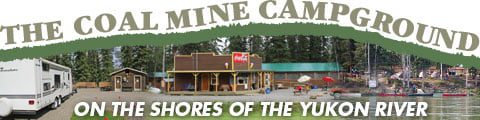
| McIntyre Park Campground (Village of Mayo) | Mayo, on the Mayo River near the bridge | Small village campground with fire pits and picnic tables, no drinking water. The village also runs Gordon Park. Phone the village office at 867-996-2317. |
| Keno Community Club Campground | Keno City, km 110 | Private, creekside, $15 a night paid at the museum. Territorial camping permits do not apply. Pack out all garbage. |
| Ethel Lake Campground (Government of Yukon) | 24 km off the Klondike Highway at km 524 | 14 sites, serviced May 25 to October 1, 2026, with a boat launch |
| Moose Creek Campground (Government of Yukon) | Klondike Highway km 559, 25 km north of Stewart Crossing | 36 sites, serviced May 8 to October 1, 2026, with interpretive trails to the Stewart River |
The Stewart River, Nacho Nyak or “big river” in Northern Tutchone, has been the home of the Na-Cho Nyäk Dun for thousands of years. Prospectors worked its gravel bars from the 1880s, and gold was found on Duncan Creek around 1898. Silver-rich ore was found on Galena Creek in 1903. The big rush came after Louis Bouvette staked the Roulette claim on Keno Hill in 1919. Horses, and later cat trains, hauled sacks of ore down to Mayo Landing in winter, and sternwheelers carried it down the Stewart and Yukon rivers.
The first all-weather road from Whitehorse to the Mayo district was finished in 1950, with ferries at the Pelly, Stewart and Yukon rivers. By the late 1950s, all the ore went out by road, and the sternwheeler era was over. United Keno Hill Mines, which opened in 1947, became one of North America’s largest silver producers and operated until 1989. The road became Highway 11 in 1978 and was later named the Silver Trail. Mining has returned to Keno Hill, which is why you will meet ore trucks today.
The Silver Trail (Yukon Highway 11) runs about 110 km (68 miles) from the North Klondike Highway at Stewart Crossing through Mayo and past Elsa to Keno City, at the foot of Keno Hill. It starts at the north end of the Stewart River bridge, at about Klondike Highway km 534. It is a dead-end road: you return the same way.
Partly. The road is paved from Stewart Crossing to just past Mayo. From there it is a maintained gravel road for roughly the last 50 km past Elsa to Keno City. Expect dust, washboard and loose gravel, and drive with your headlights on.
Only at Stewart Crossing and in Mayo. The North 60 Petro station at Stewart Crossing is a 24-hour, pay-at-the-pump card station with no store. Mayo has gas and propane. There is no fuel or grocery store beyond Mayo, so fill up and buy food and water in Mayo before you drive to Elsa and Keno City. In Keno City, the Keno City Snack Bar serves pizza, but hours vary, so phone ahead.
Allow about 1.5 to 2 hours one way from Stewart Crossing to Keno City without stops: it is paved to just past Mayo, then slower gravel. Most people make it a side trip of a day or two, with a night in Mayo, at Five Mile Lake or in Keno City. Travel Yukon allows 5 to 6 hours from Mayo to Whitehorse (406 km) and 3 to 4 hours from Mayo to Dawson City (227 km).
The Government of Yukon Five Mile Lake Campground is at km 57, about 8 km north of Mayo. It has 26 sites, a warm swimming lake and a 3.2 km trail around the lake, and it cannot be reserved. In Mayo, the Bedrock Motel and RV Park has RV pads with power and a dump station, and the village runs the small McIntyre Park Campground on the Mayo River. In Keno City, the private Keno Community Club Campground charges $15 a night, paid at the museum. Territorial camping permits do not apply there.
Highlights include the Devil’s Elbow moose-calving wetland (km 10), Mayo’s Binet House Museum and riverfront, swimming at Five Mile Lake, the Minto Bridge wetland (km 64), the Edge of Beringia moraine and the Mount Haldane Trail near Halfway Lakes (km 76), the old mining town of Elsa, and in Keno City the Keno City Mining Museum, the Alpine Interpretive Centre and the Keno Hill signpost at the top of Keno Hill.
Yes, in summer, in a car or pickup truck. Signpost Road is a steep 10.5 km gravel road with switchbacks and no pullouts, although there is room to turn around at the top. It is not recommended for large motorhomes or trailers. Ask at the Keno City Mining Museum about conditions before you go.
No, not unless locals tell you it is passable. GPS units often suggest the Duncan Creek Road (from Silver Trail km 68), but it is seasonal, not fully maintained and rough between Mayo Lake and Keno City. The Keno City Mining Museum and Travel Yukon both advise staying on the Silver Trail.
You can see Elsa from the highway, but the former United Keno Hill Mines townsite is closed to the public. Mining is active again in the Keno Hill area, so expect heavy trucks and equipment on the road, especially on the narrow, winding section between Elsa and Keno City.
Use 511 Yukon, the Government of Yukon’s official source for road conditions, closures and construction. Cell coverage along the road is limited. For local information, stop at the Binet House Museum in Mayo or the Keno City Mining Museum (both open in summer).
Kilometres follow Government of Yukon kilometre posts and are approximate. Seasons and dates are for 2026. Always check 511 Yukon before you travel. Last updated: November 2026.