














































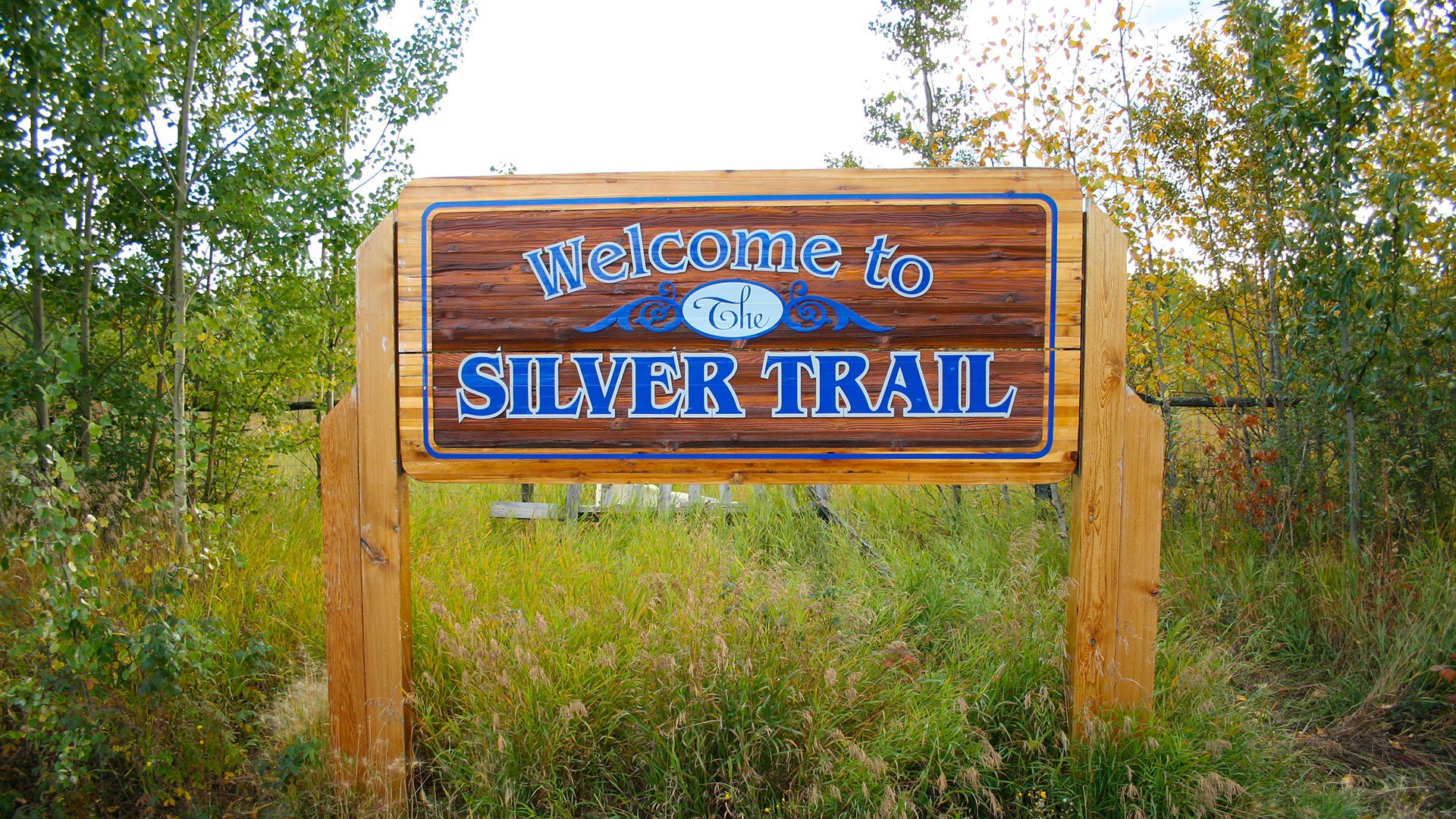
The Silver Trail region lies within the traditional territory of the Na-cho Nyäk Dun Nation, the most northerly Nation of Northern Tutchone speaking people. Historically, these first people lived trapping, hunting, and fishing on the land and rivers of the modern-day Silver Trail region. They developed trade relationships with coastal First Nations and , later, with explorers and traders entering the area.
Changes to the Na-cho Nyäk Dun arrived once prospectors and missionaries did in the early twentieth century. When prospectors arrived to Dawson only to find that all the prime land had been staked, explorers moved back down south, eventually finding gold in Duncan Creek, just west of modern-day Keno. In 1919, continuing exploration projects revealed rich deposits of silver and lead ore near Keno Hill, and mines and settlements sprang up over the next few decades in response. The Na-cho Nyäk Dun relocated to a more permanent village site south of Mayo, and mining projects defined the population and industry levels for the rest of the twentieth century.
The Silver Trail Highway was built to provide access to the Keno Mine and other silver, lead and zinc mining projects in the region. Mayo, Elsa, and Keno City owe their existence to the mining projects that continued throughout the twentieth century. Although the mines at Keno and Elsa have since closed due to lowered mineral prices, the area is a popular destination for visitors due to its access to stunning mountain ranges, famous mining museum, and opportunity for wilderness adventures. Mayo remains the hub for services and transportation.
Devil’s Elbow Wetland
km 10 (mi. 6)
Discover the age-old movements of the moose, the river, and the Na Cho Nyak Dun, the “Big River People.” Interpretive panels lead you on a 750 m (less than 0.5 mi.) walk to a viewing deck overlooking the Stewart River Valley and its important wetland habitat for moose and waterfowl.
Stewart River Lookout
km 19 (mi. 12)
Waterfowl nest int he adjacent sloughs, while swallows feed overhead. In the evening or early morning, you may be lucky to see moose feeding on aquatic vegetation.
Binet House, Mayo
km 52 (mi. 32)
A restored heritage building in Mayo (corner of Second and Centre streets), Binet House is home to displays on area history, wildlife, geology, and local permafrost studies. Nearby is a monument marking the start of the Prince of Wales Trail and the local section of the Trans Canada Trail
Five Mile Lake Campground
km 57 (mi. 35)
A trail around the lake provides access to a wetland that is particularly active in early June. Mule Deer are sometimes seen in the hillsides.
Wareham Lake
km 60 (mi. 37)
Wareham Lake was created in 1951 when the Mayo River was dammed to provide electricity to the mines of Elsa and Keno. The dam now provides power for use as far north as Dawson.
Minto Creek Bridge
km 64 (mi. 40)
A variety of habitats draws wildlife to this rich wetland complex. Panels interpret the human and natural history of the area.
Mount Haldane
km 76 (mi 47)
Watch for the turnoff to the northeast just before Halfway Lakes. Follow a gravel road 3.5 km (2 mi.) to the trail head. This 6.5 km (4 mi.) trail leads to the summit of Mount Haldane, which offers wonderful opportunities to view subalpine fauna and flora. Estimated time is 6 hours return. A trail guide is available at the Binet House in Mayo.
Signpost Hill, Keno City
km 111 (mi. 69)
This area is renowned for its arctic butterflies, but there is fare more than that to see. Collared Pika and Hoary Marmots are commonly seen. The Signpost Road, which can be driven (not suited for RVs), leads 10.5 km (6.5 mi.) to the milepost sign on top of Keno Hill. Lean more about alpine wildlife at the Keno Hill Alpine Interpretive Centre, beside the Keno City Mining Museum. Pick up your copy of Viewing Alpine Wildlife on Keno Hill and Exploring Keno Hill: Stories of a silver deposit, or any of the other free brochures.