


















































Field guide launch and walk
2:00 pm | Interpretive Centre
Where the wild plants grow
7:30 pm | Presentation with Caitlin Willier at Interpretive Centre
Flora of Dempster Country
10:00 am | Guided Hike
Botany art demonstration
11 am to 4 pm | Art demonstration with Darcy McDiarmid and Chantal Rousseau | Interpretive Centre
Short and hairy: how plants adapt to survive and thrive in Tombstone
7:30 pm | Presentation with Kirsten Wilcox at Interpretive Centre
Tombstone Flowers
10:00 am | Guided hike
Botanical printing workshop
2:00 pm | Miriam Behman · space limited, sign up at Interpretive Centre
To join a hike meet at the entrance of the campground.
Guided walks are rated easy and are ~2 hours.
Guided hikes are 4–5 hours and require a moderate level of fitness.
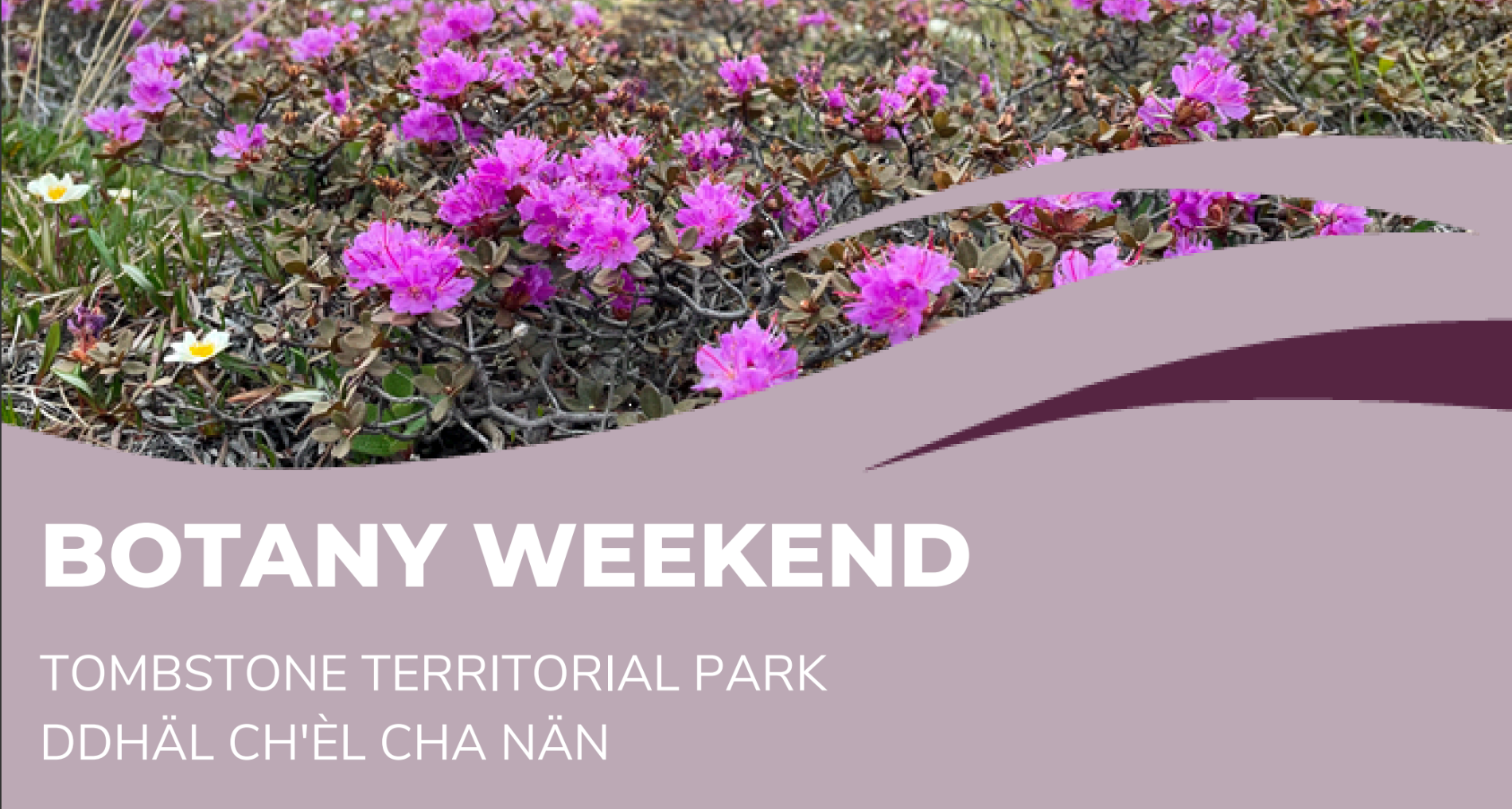
There are more than 500 species of flowering plants that can be found along the Dempster Highway representing about 50 plant families. This collection gives a taste of the 25 most common families of flora, with one or more species from each family illustrated.
The subarctic is a place of extremes. The deep freeze that locks the land for most of the year gives in to intense 24-hour daylight and high UV exposure. There is no guaranteed frost-free season and snow patches can persist through the summer. Permafrost is never far off. The flora of the north has evolved to survive a short and severe growing season. Some species have been growing here since the Pleistocene, finding refuge on this western edge of Beringia during the last ice age.
Almost all plants in the subarctic are perennial and require more than one year to reach maturity; some can live for decades. Many species take advantage of the fierce winds using them to spread seeds great distances. Typically, shallow roots allow plants to anchor on stone or frozen ground. Some flowers emerge through the snow, melting their way into the sunlight.
This collection was created to honor the functional beauty of the flowers of the living blanket that covers our cold land. It was created in remembrance of Annie Henry, who was born and raised in the Ogilvie Mountains, before the Dempster Highway was constructed. She would have walked among these flowers every summer. We are grateful that her people lived in such a way that the diversity of the natural world survived and thrived. The pretty faces of these flowers turn towards the sun and brighten the land each spring, may we continue to hold space for them to do their good work.